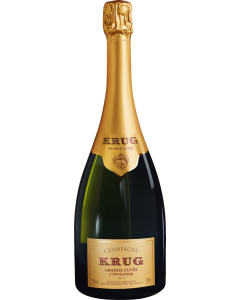
Joseph Krug arrived in Champagne in 1834, working first at Jacquesson before founding his own house nine years later. A German immigrant with radical ideas, he rejected the prevailing wisdom that great champagne required great vintages. Instead, Krug proposed that the chef de cave's skill could transcend nature's inconsistencies. His philosophy was simple yet revolutionary: create the fullest expression of champagne every year, using reserve wines like an artist uses a palette. This approach, maintained across six generations, remains unchanged—each Krug still ferments in small oak barrels, each blend still aims for maximum complexity rather than consistent house style.
Every Krug is the fullest expression of champagne, regardless of vintage conditions.
Krug's philosophy centers on one belief: champagne should be an experience of maximum flavor and complexity. They achieve this through small-plot fermentation in 205-liter oak barrels, extensive use of reserve wines spanning multiple decades, and malolactic fermentation that's allowed to proceed naturally. Each vineyard plot is vinified separately—over 400 individual lots annually—giving the chef de cave an enormous palette for blending. The house maintains that vintage conditions are merely one factor; the blender's art can create great champagne in any year. This requires holding vast stocks of reserve wines, some aged fifteen years or more, making Krug among the most expensive champagnes to produce.
Not sure where to start? The quiz takes four minutes and ends with a specific bottle recommendation.
Find your Champagne moment →Dense and layered, with a weighty mousse that coats the palate. Honeyed richness emerges first, followed by nutty oxidative notes and a mineral backbone that extends the finish. Each sip reveals new facets—dried fruits, brioche crust, sea spray.
More focused than Grande Cuvée, showing the particular character of its year. The mousse feels more precise, the fruit more defined. Layers of complexity still emerge, but with vintage-specific personality leading the way.
Crystalline precision meets profound depth. The texture is almost creamy despite being pure Chardonnay, with mineral notes that seem to echo the Mesnil-sur-Oger terroir. Reserved when young, it reveals extraordinary complexity with age.
Private tastings in Krug's historic cellars focus on their unique production methods. Visitors taste directly from barrel during fermentation season, experiencing how individual vineyard plots contribute to final blends. The tasting room, designed by architect duo Duccio Grassi, provides an intimate setting for understanding Krug's philosophy through comparative tastings.
5 Rue Coquebert, 51100 Reims
Les Crayères — This Relais & Châteaux property in Reims offers the luxury that complements Krug's uncompromising standards, with cellars that properly store the champagnes you'll want to collect after visiting.
8wines.com is an online wine retailer based in Prague, shipping across Europe. Its Champagne catalogue includes over 130 references, from established houses to collectible vintages. Orders ship insured within 1–3 days.
Affiliate links: we may earn a commission if you buy, at no extra cost to you. The choice of bottle is editorial — see our affiliate disclosure.