From the shout of the grape variety to the whisper of the terroir.
Most champagne labels tell you what is in the bottle: brut, blanc de blancs, grand cru, the vintage if there is one. It is a vocabulary of categories, and it works because champagne was built as a blended product where the category is the promise. Larmandier-Bernier took two of its cuvées out of that vocabulary entirely.
The wine now called Latitude was named Tradition in the 1970s by Pierre Larmandier's parents. The wine now called Longitude had been sold as Blanc de Blancs since the beginning of the twentieth century. Both names were accurate and both said nothing about where the fruit came from — and where the fruit comes from is the entire argument this estate makes.
So Latitude became Latitude because it is drawn exclusively from Chardonnay in the south of Vertus: always the same band of hillside, the same line across the map. The soils there are generous, and the wine is correspondingly round — it is the estate's everyday bottle in the best sense, the one that does not require an occasion.
Longitude became Longitude because its Chardonnay comes from Vertus, Oger, Avize and Cramant — four villages that happen to sit almost on a line, close to the fourth meridian. Running north up that line, the chalk comes nearer and nearer to the surface, and the wines get longer, straighter, more mineral. The name is not a metaphor. It is a description of a route you could drive.
Once you notice this, the rest of the estate's decisions read as the same decision repeated.
Sixteen hectares in the Côte des Blancs, farmed biodynamically since 1999 and certified organic since 2003. From that same year, 1999, the ferments have been spontaneous — indigenous yeasts only. These dates matter because they are early: this was not a conversion undertaken once the market began rewarding it.
The vines average around thirty-five years, and they descend from sélection massale taken from the vines of the Larmandier and Bernier grandfathers rather than from a nursery catalogue. That is a slower and less predictable way to replant, and it is the only way to keep the particular plant material a family has selected over generations. The estate calls it a natural inheritance, which is exactly what it is.
The soil is ploughed to push roots downward. Picking is by hand at full ripeness, pressing is gentle, and fermentation happens in Stockinger casks and large foudres. The wines rest on their lees until the end of July, then go into bottle with no fining and no filtration, and then wait years in cellars cut into the chalk beneath Vertus. Dosage is minimal throughout the range and absent altogether from some of it.
None of this is unusual on its own; every element can be found somewhere among the region's better growers. What is unusual is the consistency — and the fact that it was assembled before there was any commercial reason to. The wider shift that made this style visible is covered in our piece on grower champagne and the grandes maisons.
Chalk-driven and bone dry, or something rounder? The quiz sorts it out in two minutes.
Find your Champagne moment →Chardonnay from the south of Vertus, where the soils are richer. Round, generous, charming — the bottle the estate describes as a pleasure at any moment, and the right place to start if you have never drunk their wines.
Chardonnay from Vertus, Oger, Avize and Cramant, where the chalk lies almost at the surface. Non-vintage, built with forty percent perpetual reserve, and the opposite of Latitude in shape: pure, straight, long.
A single parcel — the lieu-dit Les Barillers, mid-slope at Vertus — vinified on its own since 1995. One terroir, one year, no dosage at all. Saline and complex in a way the estate argues needs no blending to complete it.
Old vines on the east-facing slope at Cramant, in grand cru. The most concentrated wine in the range and the one that most rewards being forgotten in a cellar for a decade.
8wines.com is an online wine retailer based in Prague, shipping across Europe. Its Champagne catalogue includes over 130 references, from established houses to collectible vintages. Orders ship insured within 1–3 days.
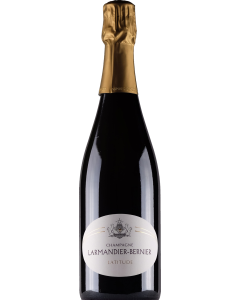 Latitude Blanc de Blancs →
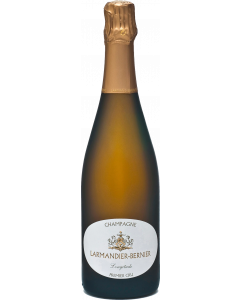 Longitude Blanc de Blancs Premier Cru →
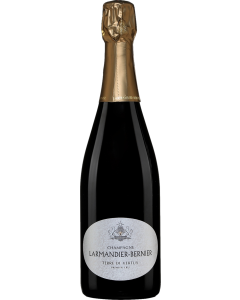 Terre de Vertus Premier Cru 2017 →
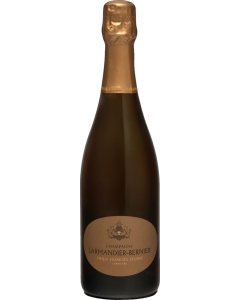 Vieilles Vignes du Levant Grand Cru 2014 →
Pierre and Sophie Larmandier run the estate with their son Arthur, and it was among the first twenty-four properties anywhere to be given Robert Parker's Green Emblem, a distinction for exemplary sustainability. That is worth noting mainly because the practices it recognises here predate the award by two decades.
Vertus is an instructive place to understand the Côte des Blancs, because it is where the slope stops behaving. The grand cru villages to the north — Cramant, Avize, Oger, Le Mesnil — are the postcard version of chalk and Chardonnay. Vertus is premier cru, larger, more varied, with pockets of Pinot Noir and soils that change within a few hundred metres. A grower who wants to argue that place matters more than classification could hardly have picked a better address.
Why are the Larmandier-Bernier cuvées called Latitude and Longitude?
Because both names describe where the grapes grow rather than what the wine is. Latitude comes entirely from Chardonnay in the south of Vertus — always the same line of latitude. Longitude comes from Vertus, Oger, Avize and Cramant, villages that form a line close to the fourth meridian. The cuvées were previously called Tradition and Blanc de Blancs, which named a category instead of a place.
Where is Larmandier-Bernier based?
In Vertus, at the southern end of the Côte des Blancs in the Marne. The family has been contributing to the reputation of Côte des Blancs champagne for eight generations, and works sixteen hectares.
Is Larmandier-Bernier biodynamic?
Yes. The estate has worked biodynamically since 1999 and has been certified organic since 2003. Fermentation has been with indigenous yeasts since the same year, 1999.
What is Terre de Vertus?
A single-parcel Chardonnay from the lieu-dit Les Barillers, mid-slope at Vertus, vinified separately since 1995. It is bottled non-dosé — one terroir, one year, no added sugar. The estate's argument is that when the balance is already there, blending is not needed.
How old are the vines at Larmandier-Bernier?
Around thirty-five years on average, and they come from sélection massale taken from the Larmandier and Bernier grandfathers' vines rather than from commercial clones. The estate treats that plant material as a natural inheritance to be preserved.
Who runs the estate today?
Pierre and Sophie Larmandier, together with their son Arthur. The estate was among the first twenty-four in the world to receive Robert Parker's Green Emblem, awarded for exemplary sustainability.