Behind every wine there is a terroir, and the man who makes it.
The house begins in 1858 with a man who was not from here. Gaspar Péters came from Luxembourg, married a Mademoiselle Doué who owned vines at Le Mesnil-sur-Oger, and started working roughly two hectares. He and his son Louis Joseph did what almost every grower did then: sold the entire harvest to the trade, and kept cattle and a merchant business besides. Growing grapes was one income among several, and putting your own name on a bottle was not something people like them did.
That changed in 1929, at the least promising moment imaginable. With the world economy collapsing, Camille Péters decided to stop selling everything to the houses and commit his production to a label of his own. The following year he bought two and a half hectares at a lieu-dit called Les Chétillons.
In 1932 his eldest son Pierre, aged twelve, began working the trade fairs by himself and building the customer list. It is worth pausing on that: a schoolboy selling champagne alone, for a brand three years old, in the depths of the Depression. When Camille died suddenly in 1944, Pierre took over the estate. The first vintage under the name Pierre Péters — the 1944 — appeared in 1946. His mother died in 1949, and he raised his younger sisters alongside the vineyard, spending thirty-five years enlarging it.
Ill health forced him to hand over in 1967 to his younger son François, who ran it for the next forty years and took the vineyard to seventeen hectares. Rodolphe Péters, an oenologist, arrived in 2007 after twelve years working around the wine and champagne trade, and took charge in 2008.
Camille's purchase is now the most admired thing the family owns. Les Chétillons is a lieu-dit inside the grand cru village of Le Mesnil-sur-Oger, and the estate holds three parcels of old vines there, all past forty-five years of age. Each parcel is fermented separately and the three are then assembled into a single vintage-dated mono-cru — one village, one site, one year. The cuvée has been made since 1971.
What the wine is famous for is the specific severity of Le Mesnil chalk: power and minerality rather than charm, a wine that is frequently unapproachable young and then unmistakable at fifteen years. The writer Michael Edwards has described Les Chétillons as one of the finest pieces of land in Champagne, and the judgement has stuck.
The village itself explains a good deal of this, and we have written about it separately in our guide to Le Mesnil-sur-Oger. What the Péters holding adds is continuity: the same three parcels, vinified apart, every year for more than half a century, which is how a piece of ground becomes legible in the first place.
Chalk and severity, or something rounder to open tonight? Two minutes to find out.
Find your Champagne moment →Just over nineteen hectares, held almost entirely in the Côte des Blancs and concentrated in four villages: Le Mesnil-sur-Oger, Oger, Avize and Cramant. The chalk there comes up almost to the surface and functions as a water reservoir, which is why these vines carry dry summers better than the soil depth would suggest. The plantings run along the hillside facing east, sheltered from the westerlies. Farming is certified HVE.
In the cellar the emphasis falls on the press. Whole bunches are picked by hand and taken to the press with deliberate care, and the pressing is slow, precisely so the juice can be fractionated and the most interesting portions isolated for particular cuvées. That sounds technical and is in fact the whole argument: Chardonnay, in this family's account, changes character enormously depending on the ground it grew in, so the work consists of not blurring those differences.
One consequence is that this is a blanc de blancs house almost to the exclusion of everything else. It stayed that way until 2009, when a rosé called Rosé for Albane appeared — described by the family, without irony, as a small revolution.
The house wine and the sensible place to begin. Grand cru Chardonnay from the four villages, built on a reserve that gives it more depth than the price implies. Citrus, chalk, and a finish that goes on longer than expected.
Three parcels of vines over forty-five years old in one lieu-dit at Le Mesnil, vinified apart and assembled. Made since 1971. Severe and mineral in youth; the bottle to buy two of and forget one.
The vintage expression of the estate style, drawn from across its grand cru holdings rather than one site. Where Les Chétillons argues for a place, this argues for a year.
A blend assembled from the finest wines in the cellar, released as a collection cuvée. The rarest thing the house makes, and the clearest look at what a deep reserve of Chardonnay can do.
8wines.com is an online wine retailer based in Prague, shipping across Europe. Its Champagne catalogue includes over 130 references, from established houses to collectible vintages. Orders ship insured within 1–3 days.
Affiliate links: we may earn a commission if you buy, at no extra cost to you. The choice of bottle is editorial — see our affiliate disclosure.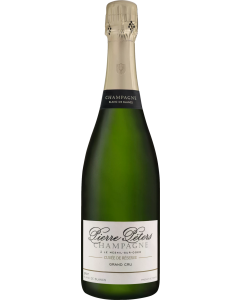
More than eighty percent of the bottles the estate ships now leave France. For a nineteen-hectare grower that is an unusual number, and it says something about how the world came round to grower champagne: a family that spent two generations selling its fruit anonymously to the trade now sends most of its production abroad under its own name.
Visits with tasting are possible but the calendar is real: the estate suspends them through the holidays and the harvest, and resumes only once fermentations have finished — in practice from around the twenty-first of September. Worth checking before you drive to Le Mesnil.
What is Les Chétillons?
A lieu-dit in the grand cru village of Le Mesnil-sur-Oger, and the name of the estate's special cuvée. Pierre Péters owns three parcels of old vines there, all over forty-five years old. Each parcel is vinified separately and then blended into a vintage mono-cru, made since 1971. The writer Michael Edwards has called Les Chétillons one of the finest pieces of land in Champagne.
Where are the Pierre Péters vineyards?
Just over nineteen hectares, mostly in the Côte des Blancs and specifically in the villages of Le Mesnil-sur-Oger, Oger, Avize and Cramant. The chalk lies at the surface there, acting as a water reservoir, and the hillside vines face east, sheltered from the westerly winds. The estate is certified HVE.
How old is the house?
It goes back to 1858, when Gaspar Péters, originally from Luxembourg, married a Mademoiselle Doué who owned vines at Le Mesnil-sur-Oger and began working around two hectares. For two generations the family sold its entire harvest to the trade; only in 1929 did Camille Péters start bottling under his own name.
Does Pierre Péters make anything other than blanc de blancs?
Almost nothing. The house made white-grape champagne exclusively until 2009, when the cuvée Rosé for Albane appeared — described by the family itself as a small revolution. Everything else remains Chardonnay.
Who runs Pierre Péters today?
Rodolphe Péters, an oenologist, who joined in 2007 after twelve years working around the wine and champagne trade and took charge in 2008. He succeeded his father François, who had run the estate for forty years from 1967 and grew the vineyard to seventeen hectares.
How much of the production is exported?
More than eighty percent of the bottles shipped now go abroad. That is a striking figure for an estate of nineteen hectares, and it reflects how far the reputation of Le Mesnil Chardonnay has travelled.